



You Have Excellent Specialists. So Why Does Your Healthcare Still Feel Chaotic?

Not every adult needs intensive care coordination. If you are healthy, take nothing daily, and see no specialists, a high-volume primary care practice will serve you perfectly well.
But there is a point where care stops being a series of appointments and starts being a system that needs managing. Most people cross that line without noticing, and the first sign is usually a feeling rather than an event: you have good doctors, and yet nothing quite adds up.
If that sounds familiar, the question is not whether you need another specialist. It is whether anyone is holding the whole picture. That role belongs to a coordinating internist, and this page is about recognising when you need one.
For how that coordination actually works in practice, see our companion piece on specialist coordination in Los Angeles.
Six Situations Where a Coordinating Internist Changes Things
1. You manage three or more chronic conditions
Each condition may be well controlled on its own. The risk sits in the interactions between them, and in treatment decisions that make sense for one condition while working against another. Someone needs to hold all three at once.
2. You take five or more medications from two or more prescribers
This is the clearest threshold. When prescriptions come from different physicians who are not looking at the same list, no single person is positioned to spot a conflict. At EHG, reconciling your full medication list is a first-order task at every visit rather than a formality. For patients also managing diabetes or hypertension, that review is often the most valuable thing that happens in the appointment.
3. You have had a major cardiac, cancer, or neurological event
Recovery from a significant event usually means ongoing monitoring across several systems at once, often indefinitely. That is a coordination job, not a single specialty job.
4. You have changed primary care physicians several times
Every change costs you continuity. If nobody has held your history long enough to see a trend in it, the trend is invisible. Lab values matter less as single readings than as a direction of travel, and a direction of travel needs someone watching over years.
5. Two specialists have told you different things
When recommendations conflict, patients are left adjudicating between two experts, which is not a fair position to put anyone in. A coordinating physician's job is to resolve that before it reaches you as a contradiction.
6. You are managing a parent's care
This one comes up more than any other, and it is rarely discussed as a medical need. Adult children coordinating an aging parent's care are usually doing the coordinating themselves: carrying information between appointments, remembering which specialist said what, and noticing changes nobody else is positioned to see.
A physician acting as a reliable hub takes that weight off the family. Where transport is the barrier to consistent care, EHG also offers at-home visits.
What This Costs, and Why It Is Not Concierge
Patients who want this level of attention often assume it requires a concierge membership paid out of pocket. At Elevate Health Group it does not.
We accept most major insurance plans and bill for physician services in the normal way. We maintain panel sizes that leave our physicians the time to coordinate rather than only to treat. An optional concierge membership is available for patients who want priority scheduling and additional access, but it is never required, and the coordination described on this page is part of standard care rather than a paid tier.
If you are weighing the two models, see concierge versus traditional primary care in LA.
Diagnostics That Stay in One Place
Coordination fails when results live in separate systems. A lab ordered by one specialist sits in that hospital's records; a similar panel ordered elsewhere sits in another. Nothing links them, and nobody sees the trend.
EHG runs labs in our on-site laboratory and provides EKG testing in house. Results go straight into your chart, reviewed by the physician who ordered them. When your physician refers to a change in your kidney function six months later, they are reading a continuous record rather than recalling a number.
For what an initial comprehensive visit covers, see what happens during an annual physical in Los Angeles.
Frequently Asked Questions
How do I know if I have crossed the threshold into needing coordination?
The practical test is whether you are the one carrying information between your doctors. If you are the person remembering what the cardiologist said so you can tell the endocrinologist, you are doing coordination work that a physician should be doing. Any of the six situations above is a reasonable reason to raise it at a visit.
I am coordinating my parent's care. Can EHG work with me as well as with them?
Yes, with your parent's authorisation. Many of our patients have an adult child closely involved in their care, and we would rather that person be in the loop than working from second-hand accounts. Where travel is difficult, at-home visits can keep primary care consistent.
Will I need to give up my specialists?
No. Many EHG patients keep long-standing specialist relationships. Your physician coordinates between them rather than replacing them. Some patients find that better coordination gradually reduces how many separate specialist visits they need, but that is a clinical judgment made over time, not a condition of joining.
How do urgent questions get handled between appointments?
Established patients can reach our office by phone or through the patient portal for clinical questions between visits. If you have a new or worsening symptom, call rather than message, and do not wait for a reply. For chest pain, difficulty breathing, confusion, weakness on one side, or anything that feels immediately dangerous, call 911 or go to the nearest emergency room rather than contacting the office.
Is transferring my records difficult?
No. With your signed authorization we request records directly from your previous physicians and specialists. Bringing whatever you already have, such as recent labs, imaging reports, specialist letters, and discharge summaries, speeds it up considerably.
Elevate Health Group serves adult patients across Glendale, Burbank, La Cañada, and the greater Los Angeles area. If you are not sure whether your care needs coordinating, that is worth raising with a physician who can look at the whole picture. Contact our office or book online.
YOU MIGHT ALSO ENJOY...
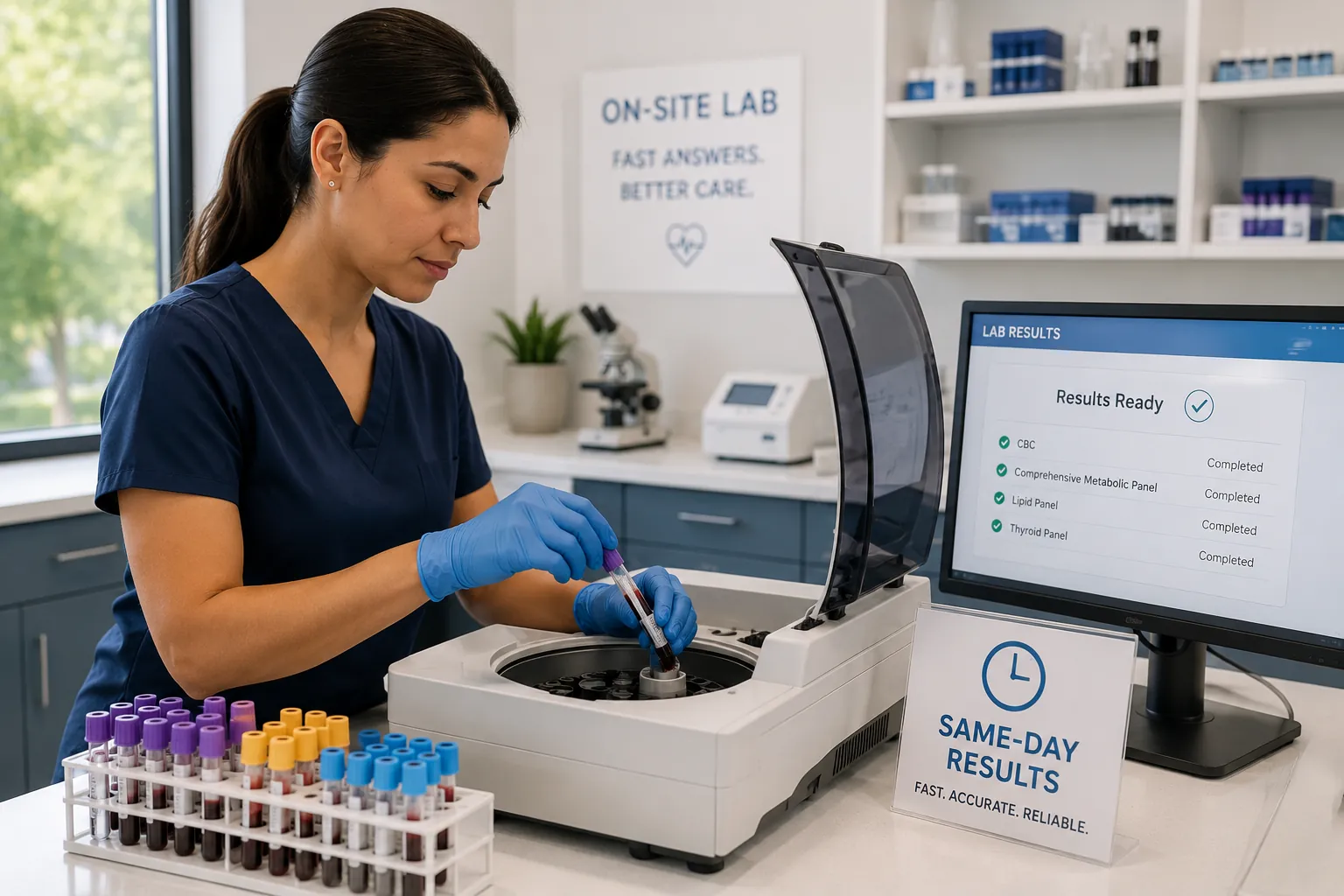
Can You Get Same-Day Blood Test Results in Los Angeles? What Labs Offer Fast Turnaround
Need same-day blood test results in Los Angeles? Learn which routine tests can be processed within hours and how Elevate Health Group's on-site lab works.
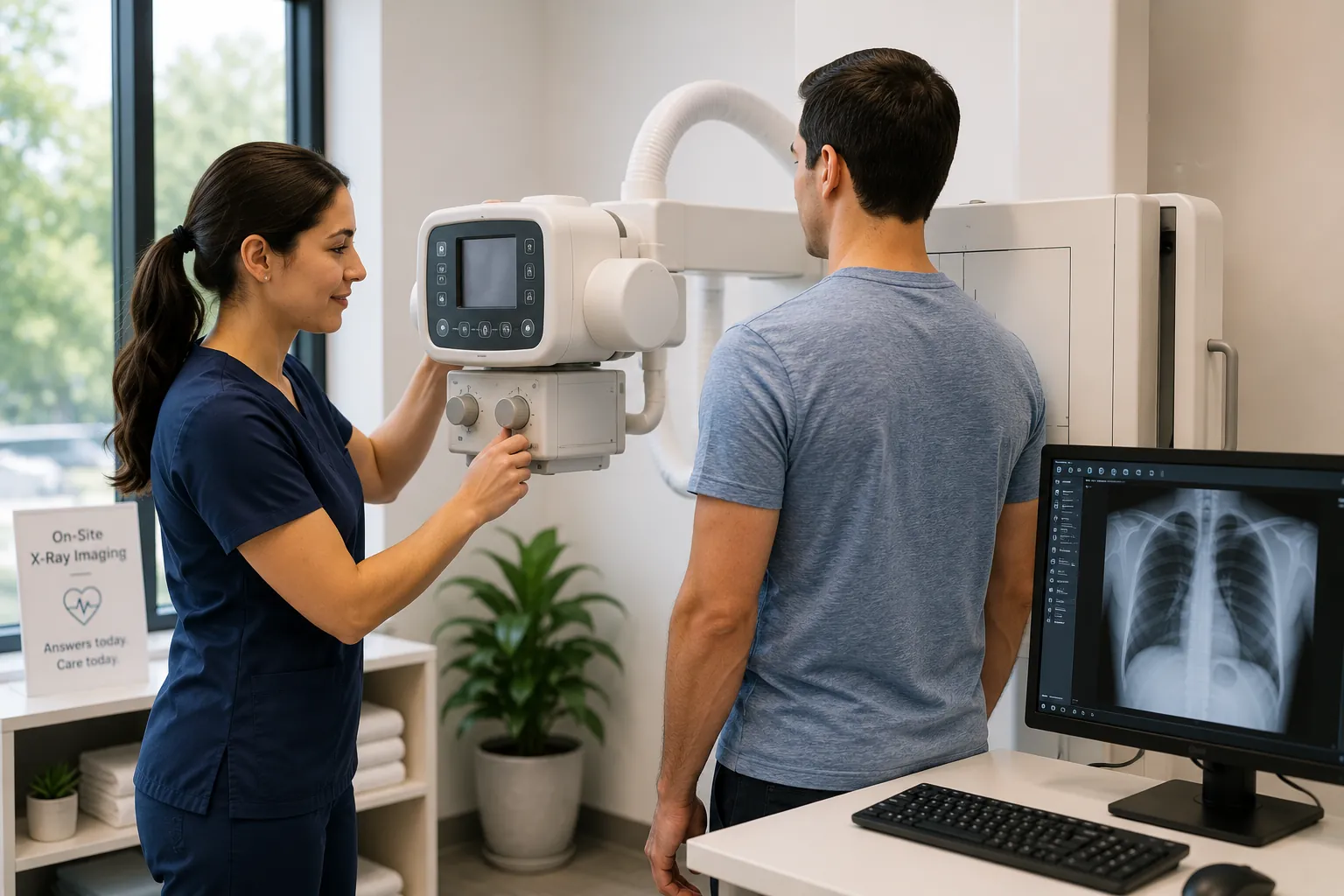
Urgent Care vs Imaging Center: Where to Get X-Rays and Diagnostic Tests Near You
Not sure where to get an X-ray in Los Angeles? Compare urgent care, imaging centers, and on-site primary care X-ray options.