


IV Vitamin Therapy: Is it Right for You?

Have you reached the recommended allotment of vitamins today? If you're like a great number of people, you probably haven't. Vitamin deficiencies, often incorrectly assumed to be an issue of the past, are still quite common. In fact, there are some shockingly common nutrition deficiencies. If you've had a physical done recently, your doctor might have alerted you to one. There are some nutrients that only come from certain foods. Vitamin deficiencies in particular can be difficult to overcome because so much of our ability to absorb vitamins from food or even supplements is tied to other conditions. For example, people who are chronically dehydrated for whatever reason often need assistance meeting their vitamin needs.
If you think you may have trouble absorbing vitamins, talk to your doctor. A blood test can confirm a deficiency, and treatment depends on the cause. For most people that means changes to diet or oral supplements; for some, a physician may recommend injections or IV vitamins. Here are the facts on common deficiencies and when IV vitamin therapy may be considered.
Common vitamin deficiencies
While we often associate diseases like scurvy with long gone days, if you're not eating enough fresh fruits and certain vegetables, you might not be getting enough vitamin C. Severe deficiency can cause fatigue, bleeding gums, and slow wound healing. Vitamin C is essential to your health.
More commonly, you'll probably hear that you have a vitamin B deficiency. Vitamin B12 deficiencies in particular are relatively common due to diet habits. Low levels of vitamin B12 or folate can cause certain kinds of anemia, and B6 plays a role in metabolism. B12 deficiency is usually treated with oral supplements or injections, depending on the cause.
How they can happen
Vitamin deficiencies can happen for many reasons. Improper eating habits are a big one. If you're not eating a balanced diet with a lot of variety in it, you could be missing out on some much needed nutrition. This is particularly common with B vitamins. They aren't the easiest to get from food sources. If you're a vegetarian, this is especially true as most sources of B vitamins are animal based. Vitamin B12 is naturally exclusively so.
Certain medical conditions can also cause vitamin deficiencies. Chronic dehydration, no matter the underlying cause, can be a major factor in poor nutrition. Even if you're an endurance athlete, if you're not properly hydrating and taking in the fuel you need, you might be surprised to find out you have a vitamin deficiency of some kind. Some people may also experience feelings of sluggishness or fatigue that isn't necessarily tied to a serious medical condition but is unpleasant nonetheless. Fatigue has many possible causes, so it is worth having it evaluated rather than assuming a vitamin is the answer.
Why IV vitamin therapy
IV vitamin therapy delivers nutrients such as lysine, zinc, vitamin C, and B vitamins directly into a vein. Because it bypasses the digestive tract, it can be an option when someone cannot absorb nutrients well, but for most people with a healthy gut, food and oral supplements work. Of course, because the body doesn't normally consume nutrients this way, it's important that you only have an experienced doctor or nurse perform this procedure. The first step will be an evaluation of your symptoms, expectations, and needs and determining if this is the right course of treatment for you.
IV fluids can also help people who are dehydrated because of an illness and cannot keep fluids down. Some clinics market IV vitamins for weight loss, but there is little reliable evidence that vitamin infusions cause weight loss.
Some IV and injection blends include lipotropic compounds such as choline and inositol, which play roles in normal liver function. That role does not mean they burn fat or cause weight loss. The only way to find out whether vitamin therapy makes sense for you is to speak with your doctor.
Conclusion
IV vitamin therapy may be an option in some situations, especially when absorption is a problem. The important thing to keep in mind is that not just anyone can admin this kind of vitamin therapy. For your safety, only a medical professional should be introducing high levels of vitamins into your system. The team at Elevate Health Group offers physician-supervised IV therapy after a review of your health history. If you'd like to learn more or set up an appointment for a consultation, contact us today. We'll give you the medical care you need so you can feel your best.
YOU MIGHT ALSO ENJOY...
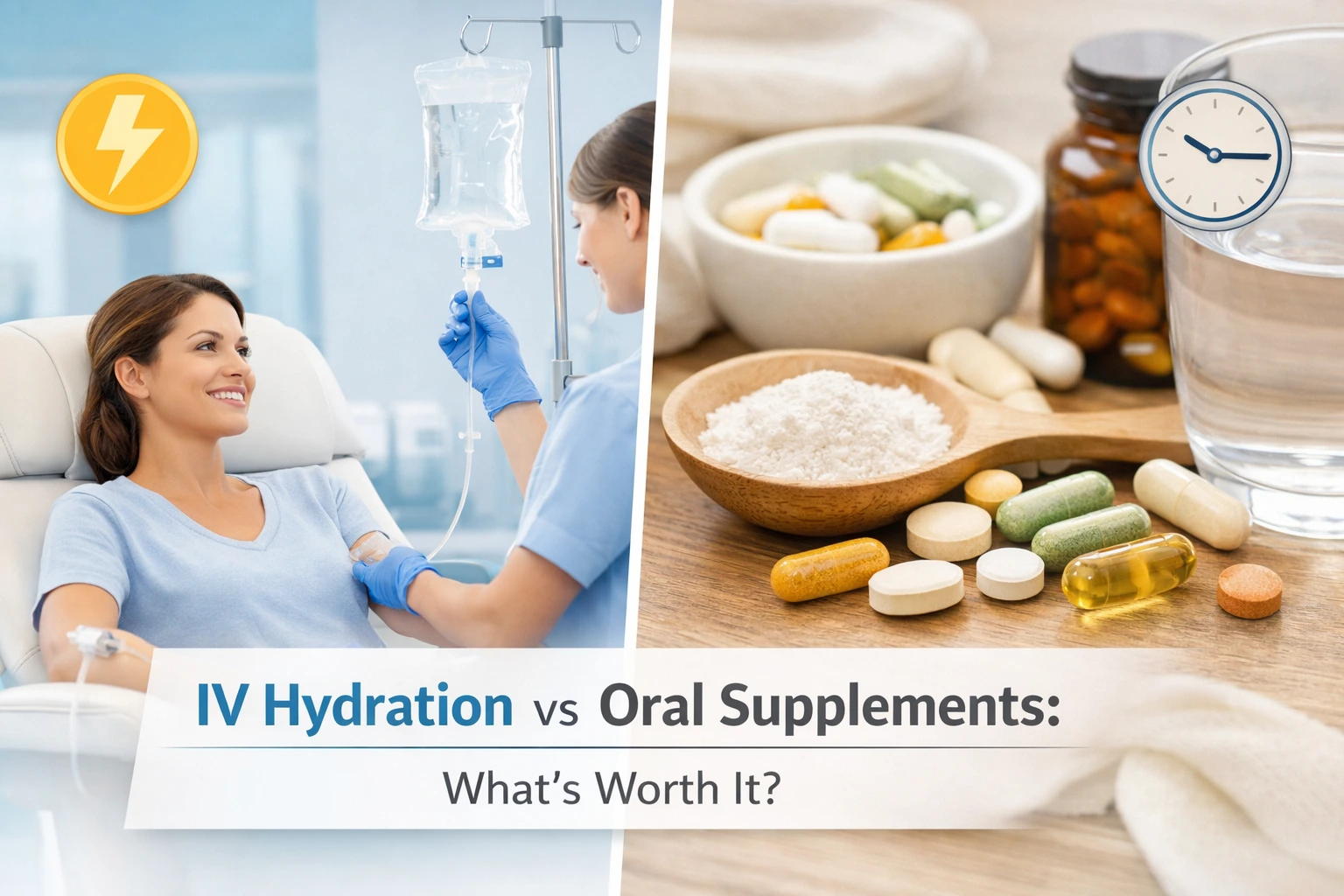
IV Hydration vs Oral Supplements: Benefits, Cost & Who Should Consider It
Is IV hydration worth the cost? Compare benefits, absorption, and pricing against oral supplements.

Glutathione & Vitamin C IV Drips in LA
Learn antioxidant IV benefits, safety considerations, pricing, and where to get quality treatment.
Our Locations:
214 N Central Ave, Glendale, CA 912031407 Foothill Blvd, La Canada, CA 910113808 W. Riverside Dr, Ste 120, Burbank, CA 91505Hours of Operation:
Mon - Fri: 8:00 AM to 12:00 PM, 1:00 PM to 5:00 PM
Sat - Sun: Closed
© 2026 Elevate Health Group. All rights reserved.
 Designed & Developed by The Gud Agency