


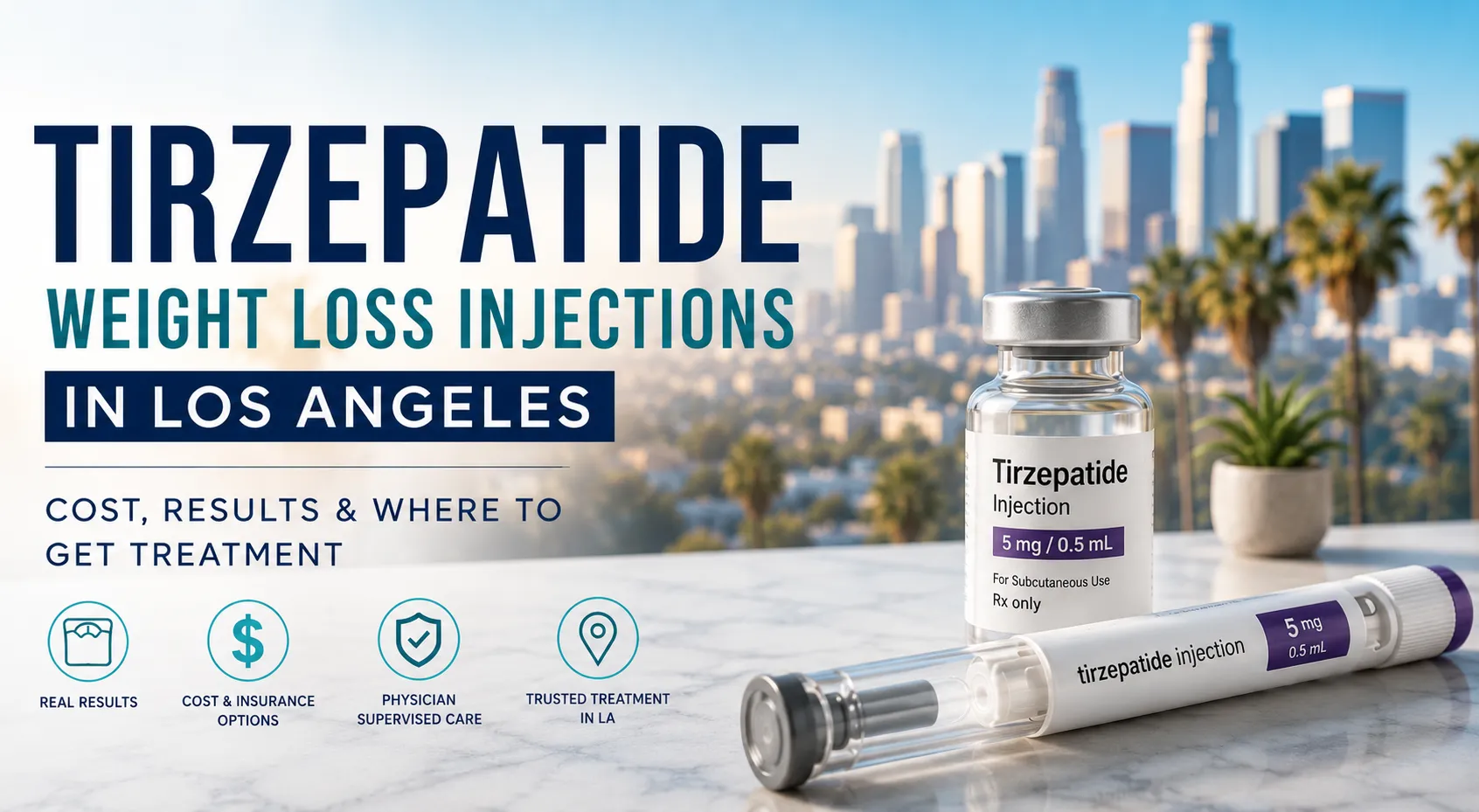
Tirzepatide Weight Loss Injections in Los Angeles: Cost, Results & Where to Get Treatment
You've tried every diet. You've lost weight, then gained it back plus more. You've heard about tirzepatide, but you don't know if it's right for you, what it actually costs, or where to get legitimate treatment in Los Angeles. Online ads promise easy access, but you want physician-supervised care, not a prescription mill.
Tirzepatide is a medication that acts on both GLP-1 and GIP receptors. This guide explains how tirzepatide works, what to discuss with your physician, costs with and without insurance, and how to access physician-supervised treatment in LA. Our weight management program at Elevate Health Group offers physician-supervised care at our Glendale, Burbank, La Cañada locations.
What Is Tirzepatide?
Tirzepatide is a dual-action injectable medication that activates both GLP-1 and GIP receptors — hormones involved in appetite, insulin secretion, and metabolism.
Brand-name tirzepatide products are FDA approved for specific uses. Compounded tirzepatide is not FDA approved, and FDA does not evaluate compounded products for safety, effectiveness, or quality. Your physician can explain which options are available to you.
How Tirzepatide Works for Weight Loss
Tirzepatide produces weight loss through multiple mechanisms:
- Appetite suppression: Acts on brain receptors involved in fullness, which can reduce hunger.
- Slowed gastric emptying: Food stays in the stomach longer, prolonging satiety.
- Improved insulin sensitivity: May help with blood sugar control.
- Increased energy expenditure: Any effect on metabolic rate appears small.
Tirzepatide is prescribed alongside nutrition and activity changes, not instead of them.
What Affects Results
Results vary from person to person and are not guaranteed. Your physician will discuss realistic expectations with you.
Factors that can affect results include:
- Starting weight and BMI
- The dose your physician prescribes
- Nutrition changes
- Regular activity and strength training
- Individual metabolism
Our physician-supervised weight loss program includes regular follow-up with your provider.
Tirzepatide Dosing Schedule
Treatment starts at low doses to minimize side effects, then escalates:
| Dose Level | Weekly Dose | Typical Duration |
|---|---|---|
| Starting dose | 2.5 mg | 4 weeks |
| Dose 2 | 5 mg | 4 weeks |
| Dose 3 | 7.5 mg | 4 weeks |
| Dose 4 | 10 mg | 4+ weeks |
| Dose 5 | 12.5 mg | 4+ weeks |
| Maximum dose | 15 mg | Ongoing |
Injections: Once weekly, self-administered subcutaneously (abdomen, thigh, or upper arm). Your care team will show you how to inject.
Dose adjustment: Your physician increases doses based on weight loss progress and side effect tolerance. Not everyone reaches maximum doses.
Side Effects and Management
Common side effects (20-30% of patients):
- Nausea (usually improves after 2-3 weeks)
- Diarrhea or constipation
- Decreased appetite (this is therapeutic, but can feel uncomfortable)
- Fatigue
- Abdominal discomfort
Management strategies:
- Eat smaller, more frequent meals
- Avoid high-fat foods (worsen nausea)
- Stay hydrated
- Dose increases only when side effects resolve
- Anti-nausea medication if needed
Serious side effects (rare but important):
- Pancreatitis (severe abdominal pain — stop medication, seek care)
- Gallbladder disease (rapid weight loss increases risk)
- Thyroid C-cell tumors (seen in animal studies; whether this risk applies to humans is not known)
- Severe hypoglycemia (if combined with insulin or sulfonylureas)
Who should NOT take tirzepatide:
- Personal or family history of medullary thyroid cancer
- Multiple Endocrine Neoplasia syndrome type 2
- Pregnancy or planning pregnancy (must stop 2 months before conception)
- History of severe pancreatitis
Our board-certified physicians screen carefully and monitor throughout treatment.
Cost of Tirzepatide in Los Angeles
| Payment Method | Monthly Cost |
|---|---|
| Insurance coverage (diabetes) | $25-$50 copay |
| Insurance coverage (weight loss) | $25-$500 copay (varies widely) |
| Without insurance (retail) | $1,000-$1,200/month |
| Manufacturer savings card | $25-$550/month (eligibility restrictions) |
| Compounded tirzepatide | Varies (not FDA approved) |
Insurance coverage reality:
Brand-name tirzepatide for diabetes: Most insurance plans cover with prior authorization. Copays typically $25-$50/month.
Brand-name tirzepatide for weight loss: Coverage is inconsistent. Some plans cover with BMI ≥30 (or ≥27 with comorbidity), but many exclude weight loss medications entirely.
Manufacturer savings programs:
- Brand-name products only: Manufacturer savings cards apply to the brand-name products, not to compounded tirzepatide.
- Copay: Savings depend on your insurance coverage.
- Eligibility restrictions: Must have commercial insurance, cannot be on government programs, income restrictions may apply.
Where to Get Tirzepatide Treatment in Los Angeles
Primary care physicians:
Many primary care doctors now prescribe tirzepatide as part of comprehensive weight management. This provides continuity and ongoing monitoring. Our general medicine team prescribes tirzepatide with full medical supervision.
Medical weight loss clinics:
Specialized clinics focusing exclusively on weight loss offer comprehensive programs including medication, nutrition counseling, and support.
Endocrinologists:
Hormone specialists are most experienced with GLP-1 medications, especially if you have diabetes or thyroid conditions.
Online telehealth platforms:
Convenient but variable quality. Some are legitimate physician services; others are prescription mills with minimal oversight.
What to avoid:
- Medication from unlicensed or unregulated sources
- Clinics that prescribe without comprehensive medical evaluation
- Platforms that don't require ongoing monitoring
- International pharmacies (safety/legitimacy questions)
What Comprehensive Tirzepatide Treatment Should Include
Initial assessment:
- Medical history review
- Physical examination
- Baseline labs (metabolic panel, thyroid, lipids, A1C)
- BMI calculation and body composition if available
- Risk factor screening
Ongoing monitoring:
- Monthly or bi-monthly check-ins during dose escalation
- Regular weight tracking and goal adjustment
- Side effect monitoring and management
- Lab monitoring (every 3-6 months)
- Nutrition counseling integration
- Exercise programming
Transition planning:
- Many patients need long-term or indefinite treatment
- Stopping tirzepatide often leads to weight regain
- Maintenance dosing strategies
- Lifestyle sustainability focus
Our comprehensive weight loss program provides full medical supervision, not just prescriptions.
Conclusion
Tirzepatide is one of several prescription options for weight management. It acts on GLP-1 and GIP receptors and is prescribed alongside nutrition and activity changes. Results vary, and it is not right for everyone.
Treatment should include physician supervision, careful dosing, side effect management, and lifestyle support, not just a prescription. At Elevate Health Group, our weight management program provides care with board-certified physician oversight at our three LA-area locations.
Schedule a weight loss consultation or learn more about our weight management program.
Frequently Asked Questions
Need Help? Find Answers Here
Related Posts

Doctor-Led Weight Loss vs Online Programs: Safety, Cost & Results Compared
Compare doctor-led medical weight loss and online programs. Understand safety, cost, results, and which approach works best.

Medical Weight Loss Clinics That Accept Insurance in LA County: Coverage Guide
Find medical weight loss clinics in LA that accept insurance. Understand what's covered, prior authorization requirements, and how to maximize benefits.
Our Locations:
214 N Central Ave, Glendale, CA 912031407 Foothill Blvd, La Canada, CA 910113808 W. Riverside Dr, Ste 120, Burbank, CA 91505Hours of Operation:
Mon - Fri: 8:00 AM to 12:00 PM, 1:00 PM to 5:00 PM
Sat - Sun: Closed
© 2026 Elevate Health Group. All rights reserved.
 Designed & Developed by The Gud Agency