


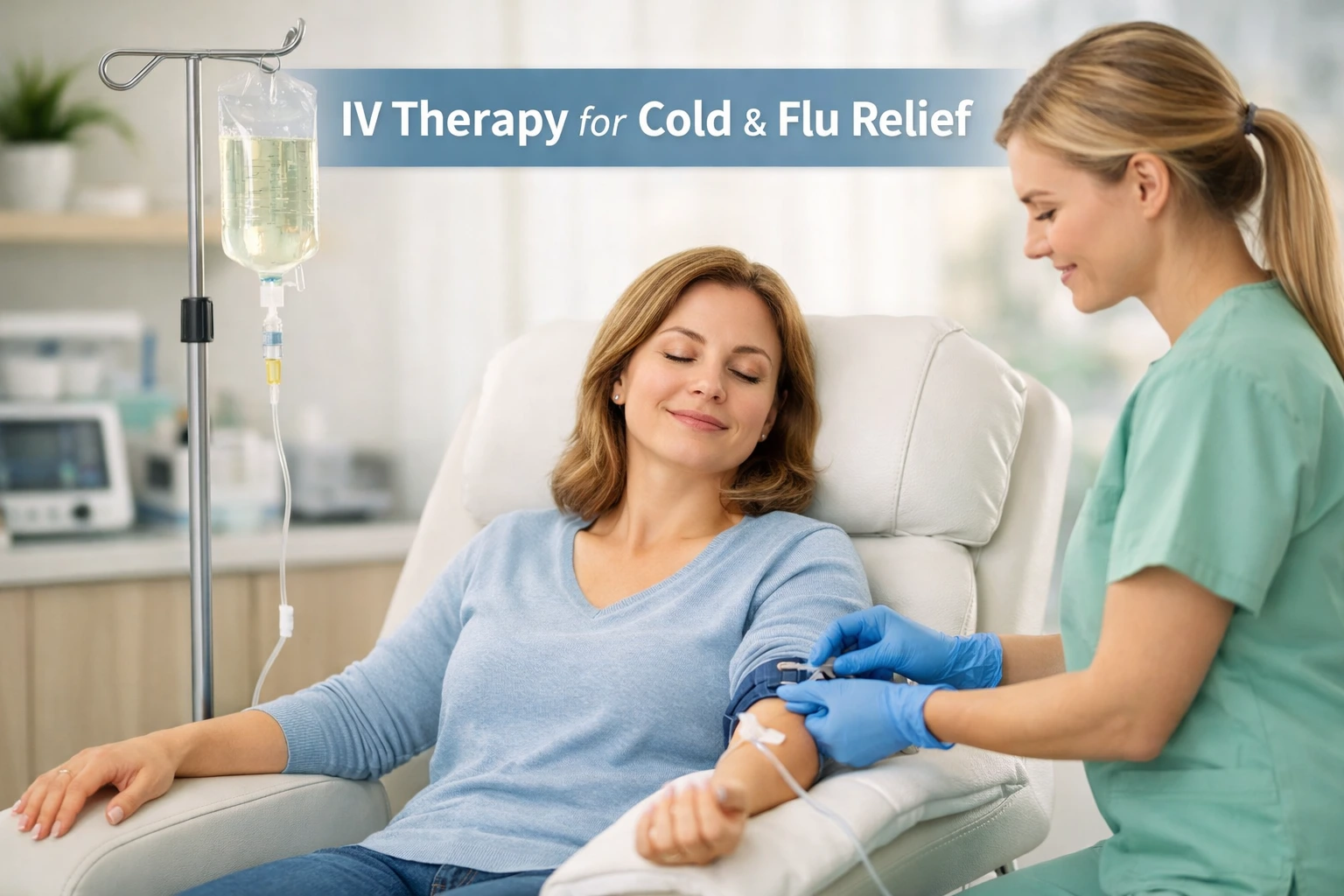
IV Therapy for Cold, Flu & Seasonal Illness: What to Know

Every cold and flu season, millions of Americans lose days to fatigue, body aches, and the frustrating cycle of slow recovery. When illness makes it difficult to drink enough fluids, a clinician can assess your hydration needs and whether oral fluids or IV fluids are appropriate.
But does it actually work? Is it safe? And is it worth the cost? This guide answers all of it — the science, the ingredients, the risks, the price, and how to find the right provider near you. You can also learn about our IV hydration service at Elevate Health Group.
What Is IV Therapy, and Why Does It Work Differently?
IV therapy involves delivering a precisely formulated blend of fluids, vitamins, and minerals directly into your vein through a small catheter. Unlike drinking water or swallowing supplements, this method bypasses your digestive system entirely. When you take oral supplements, your gut absorbs only a fraction — often as little as 20–50%, depending on the nutrient and your digestive health. During illness, this problem compounds: nausea, poor appetite, and gut inflammation can reduce absorption further.
IV therapy delivers close to 100% bioavailability. Nutrients reach your cells immediately — no digestion required, no potency lost. Our board-certified providers at Elevate Health Group tailor every drip to your exact needs and current symptoms.
What's Inside a Cold & Flu IV Drip?
Formulations for an immune-support IV drip vary. Ask your clinician which ingredients are included, at what doses, and whether they are appropriate for your medical history.
Vitamin C (High-Dose Ascorbic Acid)
Vitamin C is the cornerstone of most immune IV formulations. As a potent antioxidant, it supports white blood cell function, helps neutralize free radicals that increase during illness, and aids tissue repair. At oral doses, your gut limits absorption. Delivered intravenously, you receive substantially higher concentrations with full absorption.
Zinc
Zinc is essential for the development and function of immune cells including T-cells that target viral infections. Research consistently shows that adequate zinc levels can reduce both the severity and duration of cold symptoms. Many people are mildly deficient without knowing it, making IV delivery especially impactful.
B-Complex Vitamins (B1, B2, B3, B5, B6, B12)
Your body burns through B vitamins rapidly when fighting illness. These vitamins power cellular energy production and support neurological function — which is why depletion leads to the deep fatigue and brain fog that often linger after a cold or flu. Replenishing them IV-style provides a fast, measurable energy lift.
Magnesium
Magnesium participates in over 300 enzymatic reactions, including those that regulate immune response, muscle function, and inflammation. It's particularly useful for the muscle aches, tension headaches, and restlessness that accompany flu symptoms.
Glutathione
Often called the "master antioxidant," glutathione supports liver detoxification, protects cells from oxidative damage, and amplifies the effects of other antioxidants like Vitamin C. Your body's glutathione levels drop significantly during illness — replenishing it can enhance your immune system's natural defense capacity.
Optional Add-Ons
Many providers including Elevate Health Group allow you to customize your drip. View our full IV drip menu to see all available options, including amino acids, anti-nausea medications, and anti-inflammatory agents.
Does IV Therapy for Cold & Flu Actually Work?
IV fluids may be appropriate for dehydration during an illness. Treating dehydration is different from treating the virus or shortening a cold or flu.
What the Science Supports
Fever, sweating, vomiting, and poor fluid intake can contribute to dehydration. A clinician can assess its severity and whether drinking fluids is sufficient or IV fluids are needed.
High-dose Vitamin C has been studied extensively in clinical settings. While large-scale trials on everyday cold prevention show modest results, studies on IV Vitamin C in acute infection and immune-compromised populations show meaningful benefits — particularly in reducing oxidative stress and supporting immune cell activity.
What Patients Report
Feeling better after an infusion does not establish that it shortened the infection. Changes in symptoms should be considered alongside the natural course of the illness and any other treatment received.
Bottom line: IV fluids can address a hydration need when clinically indicated; that does not mean a vitamin infusion speeds recovery from the infection. Read more on our IV vitamin therapy benefits blog.
Potential Benefits at a Glance
- Rapid rehydration — reverses dehydration within minutes, easing headache, dizziness, and fatigue
- Faster symptom relief — many patients feel meaningfully better within hours
- Enhanced immune response — immune cells get nutrients at full concentration
- Sustained energy boost — B vitamins and electrolytes combat deep fatigue
Is IV Therapy Safe? Risks & Who Should Be Cautious
When administered by licensed medical professionals in a sterile, clinical environment, IV therapy for cold and flu is generally very safe. Serious adverse events are rare.
Common, Minor Side Effects
- Mild bruising or soreness at the insertion site
- Cool sensation in the arm as the fluid enters
- Temporary metallic taste (often from certain vitamins)
Who Should Exercise Caution
| Condition | Why It Matters |
|---|---|
| Kidney disease | Reduced ability to process high fluid volumes |
| Congestive heart failure | Risk of fluid overload |
| Pregnancy / breastfeeding | High-dose vitamins not fully studied in these populations |
| Uncontrolled hypertension | Should be evaluated before treatment |
| Known supplement allergies | Disclose all allergies at intake screening |
A reputable provider will always conduct a health screening and medical intake before every treatment. At Elevate Health Group, our general medicine team ensures every patient is properly evaluated before any IV procedure.
How Much Does IV Therapy Cost for Cold & Flu?
IV therapy is an elective wellness service not covered by most standard health insurance plans. Here's what to expect in the US:
| Drip Type | Typical Price Range |
|---|---|
| Basic hydration (saline only) | $75 – $150 per session |
| Immune / vitamin-enhanced drip | $150 – $300 per session |
| Premium formulations (NAD+, high-dose Vit C) | $300 – $500+ per session |
| Mobile IV therapy (in-home / office) | Add $50 – $100 travel fee |
| Package / membership pricing | Typically 15–30% cheaper per session |
Most plans do not reimburse elective IV therapy. However, some providers accept HSA / FSA cards — check with your plan. Contact us to discuss pricing and packages.
How to Find a Trusted IV Therapy Provider Near You
Not all IV providers are equal. Here's what to verify before booking:
- Licensed medical staff: RNs, PAs, or MDs should administer and supervise all treatments
- Sterile, clinical-grade protocols: All supplies should be single-use, medical-grade, and properly stored
- Medical intake screening: Every patient should complete a health history form before receiving a drip
- Transparent ingredient lists and pricing: You should know exactly what's in your drip and what you'll pay — no surprises
- Verifiable reviews: Look for consistent, detailed reviews on Google or Healthgrades
At Elevate Health Group, all IV treatments are administered by licensed healthcare professionals following strict clinical protocols. We serve Glendale, Burbank, and La Cañada. Find a location near you or meet our providers before booking.
What to Expect During Your IV Therapy Session
- Consultation (5–10 min): A licensed provider reviews your health history, current symptoms, and wellness goals. This is your chance to ask questions and customize your drip.
- IV Placement (2–3 min): A small catheter is placed in a vein — typically in your arm or hand. The sensation is a brief pinch, similar to a routine blood draw.
- The Infusion (30–60 min): Relax while the drip runs. Many patients read, scroll, or simply rest in our comfortable treatment chairs.
- Post-Treatment: The catheter is removed and a bandage applied. You can resume normal activities immediately. Most patients leave feeling noticeably better than when they arrived.
IV Therapy as Part of a Bigger Picture
IV therapy works best when it's part of a broader commitment to your health — not a shortcut around it. Foundational immune health still depends on:
- Sleep: 7–9 hours per night allows your immune system to repair and consolidate
- Nutrition: Whole foods, leafy greens, lean proteins, and minimal processed sugar
- Hydration: Consistent daily fluid intake, not just crisis hydration when sick
- Stress management: Chronic stress suppresses immune function significantly
- Movement: Regular moderate exercise strengthens immune surveillance
Looking for a long-term wellness partner? Explore our concierge medicine programme, weight management services, and at-home visit options for comprehensive, proactive care.
Conclusion
If cold or flu symptoms make it difficult to stay hydrated, seek an assessment of your symptoms and fluid needs. Whether IV fluids are appropriate depends on that assessment, not a promise of faster recovery from the infection.
Ready to experience the difference? Book your IV therapy session at Elevate Health Group, or contact us to speak with one of our licensed providers today. You can also read more on our blog for expert health tips and updates.
Frequently Asked Questions
Need Help? Find Answers Here
YOU MIGHT ALSO ENJOY...
IV Hydration vs Oral Supplements: Benefits, Cost & Who Should Consider It
Is IV hydration worth the cost? Compare benefits, absorption, and pricing against oral supplements.
Glutathione & Vitamin C IV Drips in LA
Learn antioxidant IV benefits, safety considerations, pricing, and where to get quality treatment.
Our Locations:
214 N Central Ave, Glendale, CA 912031407 Foothill Blvd, La Canada, CA 910113808 W. Riverside Dr, Ste 120, Burbank, CA 91505Hours of Operation:
Mon - Fri: 8:00 AM to 12:00 PM, 1:00 PM to 5:00 PM
Sat - Sun: Closed
© 2026 Elevate Health Group. All rights reserved.
 Designed & Developed by The Gud Agency