


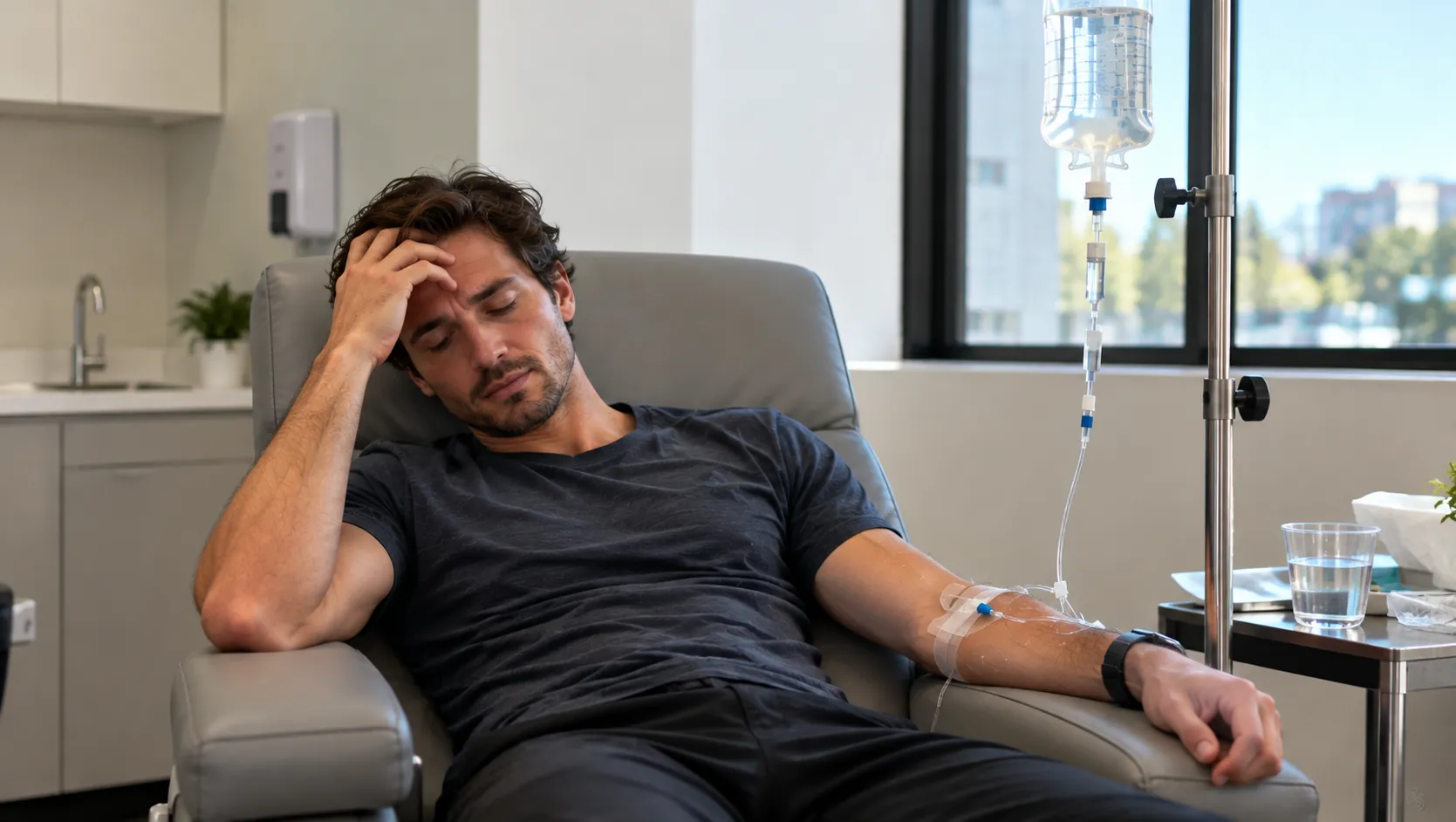
Hangover IV Therapy: What It Treats and What It Does Not
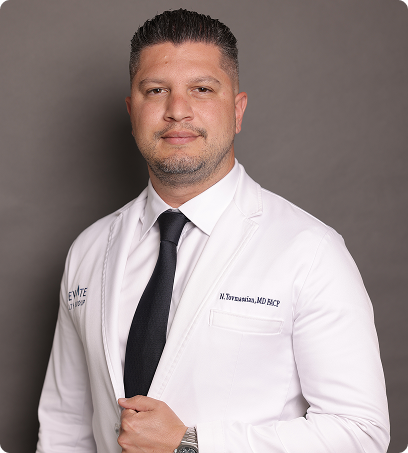
Hangover drips are marketed as a reset button. The honest version is narrower and more useful: intravenous fluid treats dehydration quickly and reliably, and dehydration is one component of how you feel after drinking. It is not the whole picture.
Elevate Health Group provides IV therapy for dehydration at our Glendale, Burbank, and La Cañada offices. This page explains what a drip does and does not address, so you can decide whether it is worth it.
What Causes a Hangover
Several things happen at once after heavy drinking, and fluid loss is only one of them. Alcohol suppresses a hormone that helps your body retain water, which is why dehydration and electrolyte disturbance follow. Alongside that sit disrupted sleep architecture, inflammation, irritation of the stomach lining, low blood sugar, and the effects of acetaldehyde, a by-product of alcohol metabolism.
Intravenous fluid addresses the first of those directly. It does not undo the others. Nothing shortens the time your body needs to metabolise alcohol and recover, and any provider suggesting otherwise is overstating what is possible.
What a Drip Actually Does
For someone genuinely volume depleted, intravenous fluid corrects that faster than drinking, because it bypasses a stomach that may not be cooperating. If nausea is preventing you keeping fluids down, that is the clearest practical case for it.
Anti-nausea medication is often what people actually find most useful, and that can be given alongside fluid where clinically appropriate. Vitamin additions are common in these drips, though evidence that they change hangover outcomes specifically is limited.
For most people on most occasions, oral rehydration does the same job for nothing. Our comparison of IV hydration and oral supplements goes into when the intravenous route genuinely adds something.
When Symptoms Need a Doctor, Not a Drip
Some symptoms after drinking are not a hangover and should not be managed with a wellness appointment. Seek emergency care for confusion or difficulty rousing someone, repeated vomiting with inability to keep any fluid down, vomiting blood, seizures, slow or irregular breathing, or skin that is cold, clammy, or bluish. These can indicate alcohol poisoning and are a 911 situation.
Separately, if hangovers are a regular feature of your week, the drip is treating a symptom of something worth discussing properly. That is a conversation for a sick visit or a routine appointment with your physician, and it is a more valuable use of the same money.
What It Costs
Hangover and hydration infusions are elective wellness services and are self-pay. Insurance does not cover them. Current pricing for each infusion is listed on our IV therapy page.
Worth weighing against that: oral rehydration solution, paracetamol used within normal limits, food, and sleep cost very little and are what most people need. Elevate Health Group does not market or recommend any infusion for a use the FDA has not approved, and intravenous vitamin blends are not FDA approved for treating hangover symptoms. Individual responses vary.
If You Do Book One
- Expect a brief clinical review before the infusion, including your medical history and medications
- Tell the provider about kidney disease, heart failure, or any fluid restriction, which change whether this is appropriate
- Ask exactly what is in the bag and at what dose
- Expect a treatment room and trained staff, not a casual setting
- Do not plan to drive if you have received medication that causes drowsiness
Service Area
Infusions are available at our Glendale, Burbank, and La Cañada offices. Care is available in Armenian, Persian, Russian, and Spanish as well as English.
Frequently Asked Questions
Need Help? Find Answers Here
If you are unwell after drinking and unsure whether you need to be seen, call the office and speak with our team before booking anything. Elevate Health Group sees adult patients in Glendale, Burbank, and La Cañada. Call 818-246-8000 or contact our office.
YOU MIGHT ALSO ENJOY...
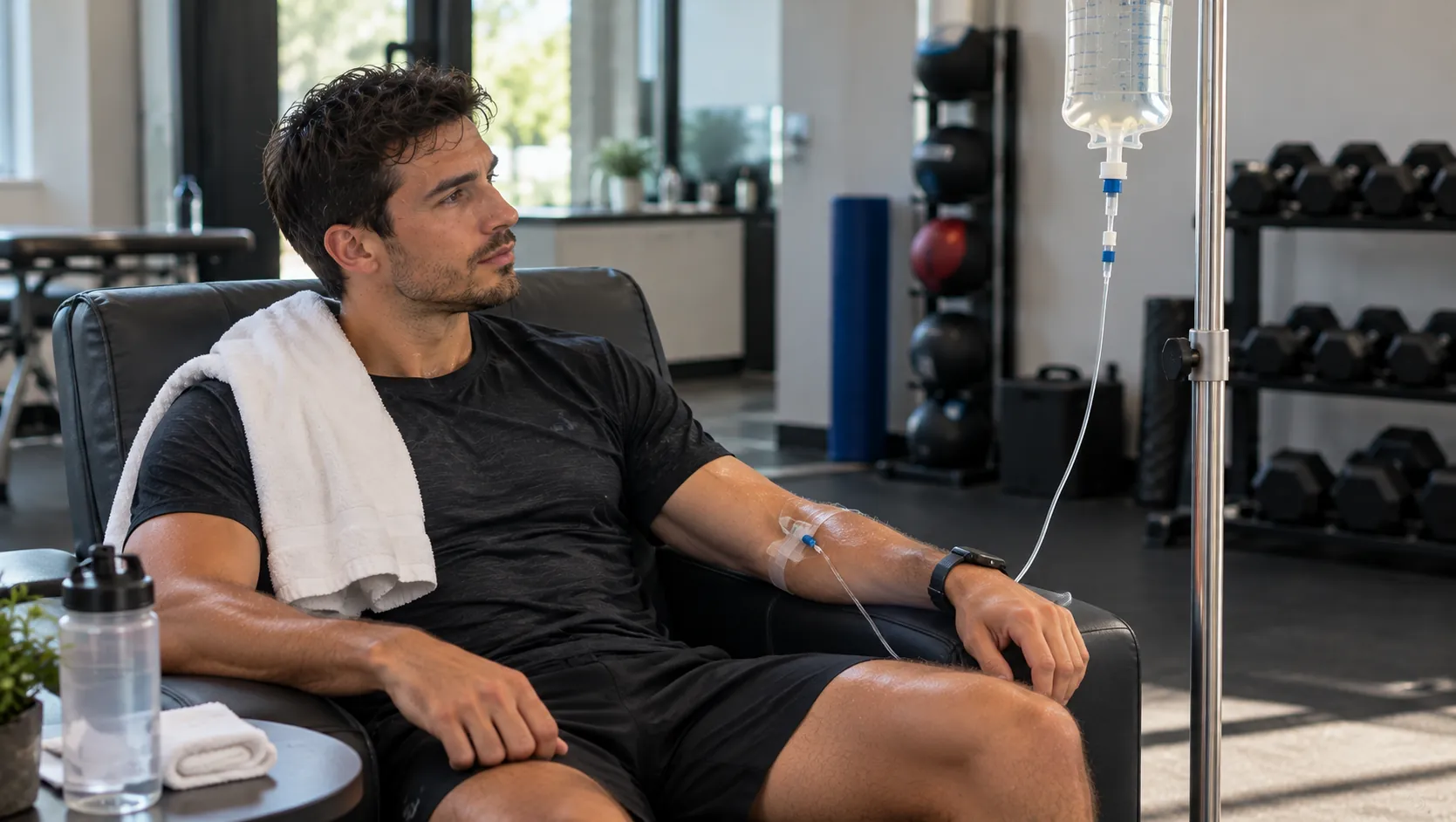
IV Drips for Athletic Recovery: What They Contain and the WADA Limit
What recovery drips contain, why most athletes do not need one, and the WADA infusion limit that can cost a competitive athlete their eligibility.

Why Patients Choose Elevate Health Group Over Hospital Systems, Med-Spas, and Concierge Clinics
Comparing a primary care doctor in Glendale across hospital systems, med-spas, and concierge practices. How access, oversight, and insurance actually differ.
Our Locations:
214 N Central Ave, Glendale, CA 912031407 Foothill Blvd, La Canada, CA 910113808 W. Riverside Dr, Ste 120, Burbank, CA 91505Hours of Operation:
Mon - Fri: 8:00 AM to 12:00 PM, 1:00 PM to 5:00 PM
Sat - Sun: Closed
© 2026 Elevate Health Group. All rights reserved.
 Designed & Developed by The Gud Agency