



Flu Shots, COVID Tests & Vaccines at Elevate Health Group: Glendale's Primary Care Alternative to Urgent Care
Here is what most adults in Los Angeles do every fall: they schedule a flu shot at a pharmacy, separately arrange a COVID test somewhere else when they feel sick, and quietly let years pass without anyone checking whether their other vaccines are up to date. They do this not because it is the best system, but because nobody told them there was a better one.
At Elevate Health Group, flu shots, COVID-19 rapid testing, and full adult vaccination reviews happen during your regular primary care appointment. The physician ordering your vaccines is the same physician who knows your medication list, your allergy history, and the health context that determines which formulations are right for you. No second location. No separate scheduling. No one is meeting your history for the first time.
This article explains what we offer, why the setting matters, and how to get it done in one appointment.
The Problem with Splitting Vaccination and Primary Care
The pharmacy vaccination model was built for speed and convenience, and for healthy adults with simple histories it works reasonably well. But it has structural limits that are easy to miss:
- Choosing between high-dose and adjuvanted flu formulations for adults 65 and older is a clinical judgment that depends on your health status and current medications, which is easier to make with your full record open.
- Vaccine catch-up for adults with chronic conditions requires medication reconciliation, because certain immunosuppressants affect timing and rule out live vaccines. That reconciliation happens naturally in a primary care visit.
- A vaccine given outside your primary care practice is recorded there, not automatically in your medical record, so your physician may not see it at your next visit.
- Without an annual review of your full vaccination history, gaps beyond the flu shot tend to go unnoticed for years.
For primary care patients at EHG, flu shots and COVID vaccines are part of your Preventive Medicine visit, reviewed by a physician who can see the whole picture at once.
Flu Shots at Elevate Health Group: What Is Actually Different
We administer standard-dose and high-dose influenza vaccines at our Glendale and Burbank locations. Existing patients can add a flu shot to any scheduled appointment, with no need to book a separate visit or drive to a second location.
More importantly, your EHG physician reviews your age, your health status, and your current medications before administering. For patients 65 and older, that review determines whether the high-dose formulation (Fluzone High-Dose) or the adjuvanted formulation (FLUAD) is more appropriate. That is a clinical decision, not a checkbox.
We also document every vaccine in your permanent medical record, where it becomes part of your ongoing health history rather than a printout you have to remember to bring to your next appointment.
COVID-19 Testing with Same-Visit Treatment
Our COVID-19 testing service uses rapid antigen testing in office, with results available during your appointment. For patients who test positive and meet clinical criteria for antiviral therapy, your EHG physician can prescribe Paxlovid or another approved antiviral in the same visit.
According to its FDA labeling, Paxlovid should be started within five days of symptom onset. Waiting a day for a telehealth callback or an at-home test result can cost you part of that window. When your testing and your prescribing physician are in the same room, that window stays open.
Patients who want same-visit strep and flu testing alongside COVID can read more about our on-site laboratory, which covers our full in-office rapid testing panel.
Adult Vaccine Catch-Up: Many Adults Are Behind Without Knowing It
The Centers for Disease Control and Prevention publishes an adult immunization schedule that many adults fall behind on. A single annual adult vaccines review with your EHG physician can identify and close gaps that have accumulated quietly for years:
- Tdap (tetanus, diphtheria, pertussis), with a Td or Tdap booster every 10 years, and a Tdap dose during every pregnancy
- Shingles vaccine (Shingrix), a two-dose series recommended by the CDC starting at age 50
- Pneumococcal vaccines (PCV20, PCV21), now recommended by the CDC for all adults 50 and older, and for younger adults with diabetes, heart disease, or immunocompromising conditions
- Hepatitis B series, now recommended for all adults through age 59, and for at-risk adults 60 and older
- Hepatitis A, frequently missed in adults who have never been vaccinated and who travel regularly
- COVID-19 vaccines, using the updated formulation for the current season
Several of these vaccines interact with medications for autoimmune conditions, cancer treatment, or immunosuppression. Your EHG physician reviews your full medication list before any vaccine is administered, with your complete chart open at the same time.
Can I Come in Just for Vaccines? Do I Need to Be an Established Patient?
Established EHG patients can request vaccine administration at any scheduled appointment. If you are a new patient, a new patient visit is the right starting point. It gives your physician the clinical context needed to administer vaccines safely and review your full vaccination history.
For adults weighing primary care options in the Glendale and Burbank area, see Top-Rated Primary Care Doctors Accepting New Patients in Burbank.
Urgent Care vs. Primary Care for COVID and Flu Testing
For non-emergency acute illness in established EHG patients, a sick visit with your primary care physician is usually preferable to urgent care:
- Your physician knows your allergy history before prescribing an antibiotic or antiviral.
- Your visit is documented in your permanent medical record, not a standalone chart that may never reach your primary care physician.
- A sick visit can become a full evaluation if your symptoms suggest something more than a typical viral illness.
- If something changes after the visit, your EHG physician is the follow-up point, and already knows the case.
EHG also offers adult urgent care for non-emergency same-day needs, including patients who are not yet established at EHG.
Frequently Asked Questions
Can I get a flu shot and COVID vaccine at the same appointment at EHG?
Yes. In most cases, co-administration of the flu and COVID-19 vaccines is clinically appropriate. Your EHG physician confirms this at the appointment based on your health history before administering both. This is standard practice and removes the need for two separate visits.
Does EHG offer COVID-19 testing for walk-in patients?
Contact our office for current walk-in availability. Established patients are seen for acute illness including COVID testing, usually same day or next day. New patients seeking COVID testing only should call ahead.
How do I know if I am behind on adult vaccines?
The fastest way is to bring your vaccination records, or request them from your last physician, to a preventive medicine appointment at EHG. If records are unavailable, your physician can check immunity through blood titers for certain diseases and recommend catch-up based on your age, health status, and risk factors.
What is the difference between the standard flu shot and the high-dose formulation?
High-dose flu vaccines (Fluzone High-Dose) and adjuvanted formulations (FLUAD) are designed for adults 65 and older, whose immune response to a standard-dose vaccine may be weaker. The CDC notes these formulations may provide better protection in this age group. Your EHG physician recommends the appropriate formulation based on your age and health status.
Can I get a Shingrix vaccination at EHG?
Yes. Shingrix is available at EHG for eligible patients, generally adults 50 and older. It is a two-dose series given 2 to 6 months apart. Your physician reviews your current medications before administering, as certain immunosuppressants require timing adjustments.
YOU MIGHT ALSO ENJOY...
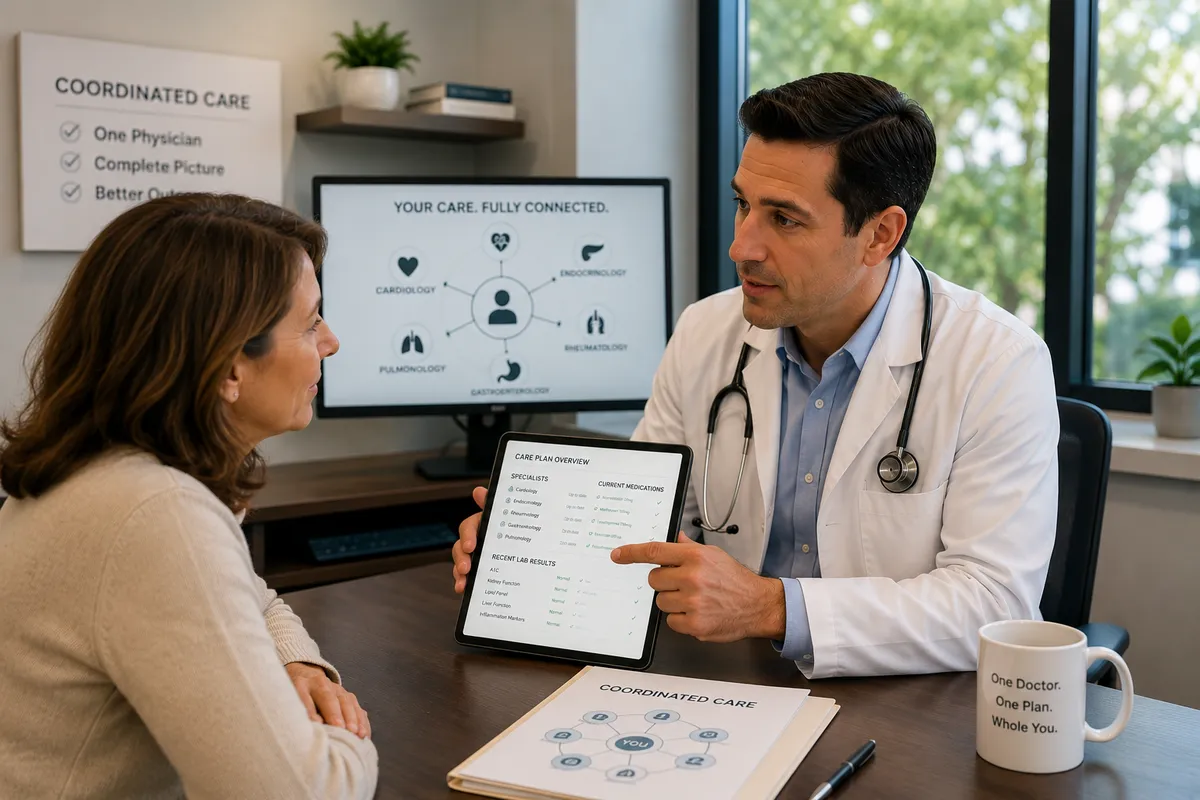
Five Specialists, No Coordinator. Why Having the Best Doctors in Los Angeles Is Not the Same as Having a Plan
If your cardiologist, endocrinologist, and rheumatologist never speak, that is parallel care, not coordinated care. How one internist connects it.

You Should Not Have to Wait Until Tomorrow to Know What You Have or to Start Treating It
Walk in with symptoms, leave with a diagnosis and a prescription. Rapid strep, flu, and COVID testing with same-visit treatment in Glendale and Burbank.