


Galleri Test Cost: What You Pay, What's Included and What It Is Not
The Galleri test is paid for out of pocket, which makes it one of the few medical tests where the price is the first question rather than the last. People searching for the cost are usually trying to work out two things at once: whether they can afford it, and whether it is worth it. The second question is the harder one and the price list does not answer it.
This article sets out what the test costs at our three offices, why insurance does not currently pay for it, and the follow-up expenses that the headline figure does not include. That last part is where most cost estimates fall apart, so it gets a section of its own.
What the Galleri test costs at Elevate Health Group
These are the prices published on our early cancer detection page. Confirm current pricing when you book, since lab pricing changes.
| Option | Price | What it includes |
|---|---|---|
| Galleri test | $949 | One multi-cancer early detection blood test screening for signals associated with more than 50 cancer types, plus the physician consultation around it |
| Annual Galleri Program | $1,800 | Two tests in a twelve month period, priority scheduling, and a physician consultation with each test |
| Galleri plus InBody | $999 | The test plus a body composition analysis |
| Galleri plus PNOE | $1,049 | The test plus metabolic and VO2 max assessment |
| Galleri plus BIOTE consultation | $1,099 | The test plus a hormone evaluation |
| Expedited results | plus $150 | Results in 7 to 10 days rather than the standard two weeks |
| Extended results consultation | plus $100 | A 60 minute review of results with prevention planning |
| Genetic counseling referral | plus $75 | Referral to a genetic counselor if results suggest hereditary risk |
| Follow-up imaging | Varies | CT, MRI or PET if a cancer signal is detected, coordinated by your physician |
Concierge members receive different pricing and priority scheduling by tier, which is set out on our concierge medicine page. The InBody and PNOE add-ons can also be booked on their own through body composition assessment and metabolic and VO2 max testing if the cancer screening is not what you are after.
Why insurance does not cover it, and the reason is regulatory
This is the part that explains the whole price. The Galleri test is not FDA approved. It is a prescription laboratory test, which is why it is ordered by a physician and billed to you rather than to your plan. Most commercial plans and Medicare do not cover it.
That status is in the middle of changing, and it is worth understanding where it stands rather than what a sales page implies. The FDA granted Galleri Breakthrough Device designation in 2018. On 23 September 2026 the Molecular and Clinical Genetics Devices Panel of the FDA Medical Devices Advisory Committee voted on its premarket approval application in three parts: unanimously that the test is safe, seven to two with one abstention that its benefits outweigh its risks, and six to four that it is effective. The FDA is not bound by the panel and has said a final decision is expected in the coming months.
Read that six to four honestly. It is a narrow margin on the question that matters most to someone paying $949, and it reflects a real scientific argument about whether finding more cancer signals earlier changes outcomes. The supporting trials, PATHFINDER 2 in North America and the NHS-Galleri trial in England, were both published in Nature Medicine, and the debate about what they showed is live rather than settled. Anyone quoting you a clean answer in either direction is overselling their case.
What this means practically: if approval comes through, coverage conversations can begin, but approval and insurance coverage are two separate things and the second usually lags the first by a long way. Do not budget on the assumption that your plan will reimburse this.
What the price does not include
The single most common mistake in budgeting for this test is treating $949 as the total. It is the cost of the first step only. The costs that follow are not optional if the result comes back abnormal.
- Diagnostic workup after a detected cancer signal. The test predicts where a signal may have originated, and that prediction has to be chased down with imaging, usually CT, MRI or PET, and sometimes a biopsy and specialist visits. Our page lists this as varies, because it genuinely does.
- Workup that finds nothing. Not every detected signal turns out to be cancer. Some people will pay for imaging and specialist appointments that end in reassurance, and that spend is real even when the news is good.
- Your existing screening, all of which continues. This test does not replace a mammogram, a colonoscopy, a Pap test, PSA testing or low-dose CT lung screening. Those are separate, they are mostly covered by insurance, and skipping them because you paid for a blood test would be the worst possible outcome of reading this article.
- Repeat testing. One test reflects one moment. Whatever interval you and your physician settle on, the cost recurs.
- The part no invoice shows. A normal result is not a clean bill of health, and an abnormal one brings weeks of uncertainty while the workup runs. Both are worth thinking about before you book, not after.
On specificity, and what a 99.5 percent figure actually means
GRAIL reports specificity of around 99.5 percent, which means the test rarely flags cancer in people who do not have it. That is a genuinely strong number and it is the reason a test like this is usable for screening at all.
It is not the same as the chance that a positive result means cancer. That depends on how common cancer is in the group being tested, and in a population of mostly healthy adults it is far lower than the specificity figure suggests. Statisticians call this the difference between specificity and positive predictive value. For you it means something simpler: a detected cancer signal is a reason to investigate promptly, not a diagnosis, and your physician should tell you that in the same breath as the result.
How often, and what the trials actually studied
Our Annual Galleri Program prices two tests across a year. Worth knowing before you choose it: the published trials evaluated annual testing. There is no trial evidence establishing that testing every six months detects more cancer or improves outcomes compared with testing once a year. More frequent testing also means more opportunities for a false alarm and the workup that follows.
That is not an argument against the program, which includes priority scheduling and a physician consultation with each test, and some people will reasonably want the closer interval. It is an argument for deciding the interval with your physician on the basis of your own risk rather than picking the bigger package by default. Our earlier article on what the Galleri test screens for and how results work covers the mechanics in more detail.
Who the test is intended for
The intended use considered by the FDA panel is screening for early detection of multiple cancers in adults aged 50 and older, by prescription, followed by diagnostic workup from a qualified clinician. Cancer risk rises steeply with age, which is why the age floor is there.
If you are younger than 50, have a strong family history, or have had cancer before, the test may still be discussed, but it becomes a judgement call rather than a straightforward fit, and the honest answer sometimes is that your money is better spent elsewhere. A preventive medicine visit or a thorough adult physical with the right bloodwork through our on-site laboratory is cheaper, covered by most plans, and for many people catches more. Our longevity services page sets out where advanced testing fits alongside the basics, and metabolic testing explains another option people often weigh against this one.
Service Area
Galleri testing is available at all three Elevate Health Group offices: Glendale, Burbank and La Cañada, serving patients across Los Angeles County including Pasadena, Toluca Lake and the surrounding foothill communities.
Frequently Asked Questions
Need Help? Find Answers Here
Decide with a physician, not with a price list
A cancer risk consultation is the right first step, and it is the step where you find out whether this test suits your situation at all. Contact our office to arrange one in Glendale, Burbank or La Cañada.
This article is general health information, not medical advice, and reading it does not create a physician-patient relationship. The Galleri test is not FDA approved as of the date of publication. It is a screening test, not a diagnostic test: a result indicating no cancer signal does not rule out cancer, and a detected cancer signal is not a diagnosis. The test is not a substitute for guideline-recommended cancer screening. Prices shown are those published by Elevate Health Group at the date of writing and are subject to change. Individual results vary.
YOU MIGHT ALSO ENJOY...

Hormone Pellet Therapy Cost: What Drives the Price and What to Ask
Why no clinic can quote one number for hormone pellet therapy, what insurance will and will not cover, and the questions to ask before you pay.
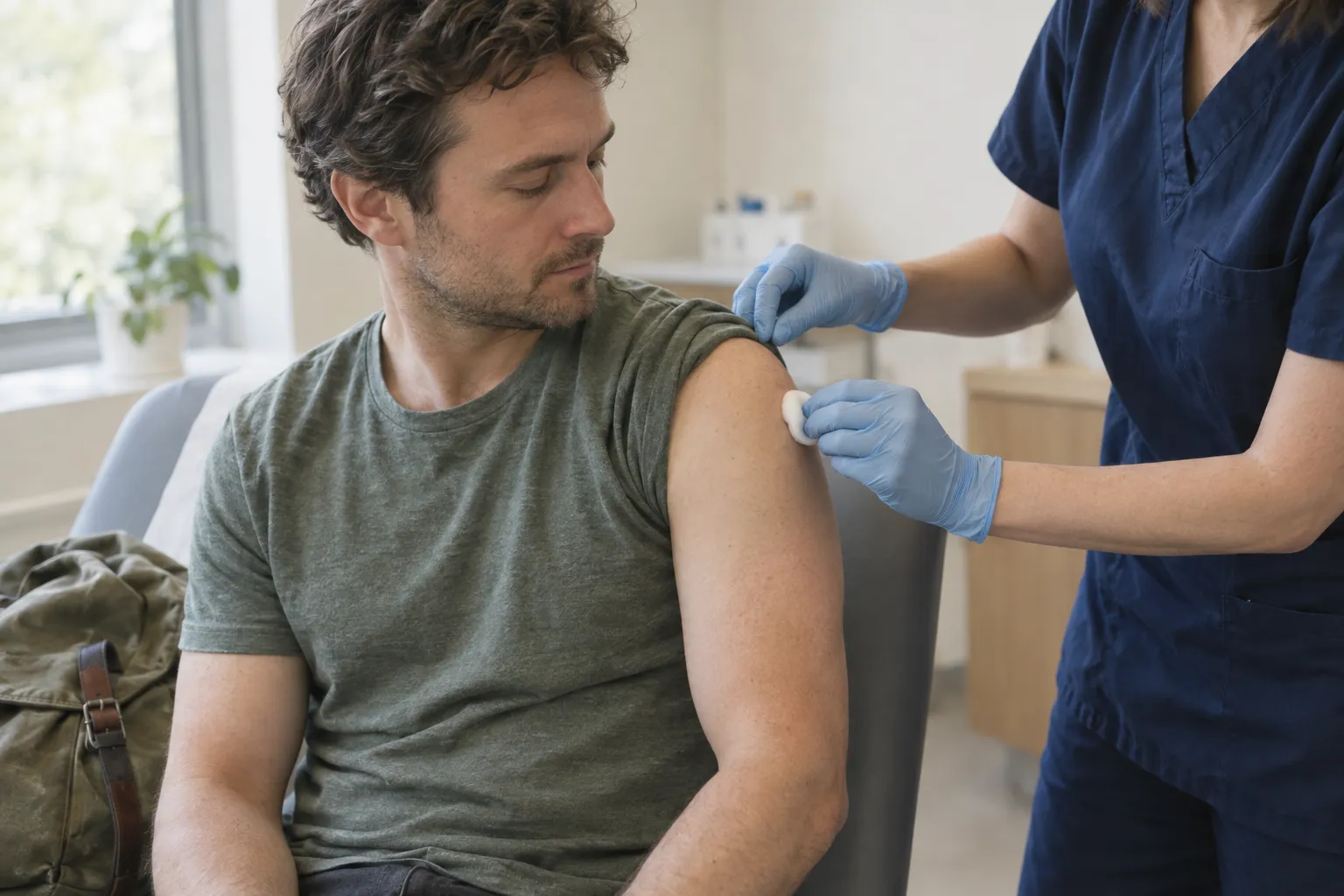
Travel Vaccines in Los Angeles: What You Need and How Far Ahead to Book
CDC advises a travel health appointment 4 to 6 weeks before departure. What a travel consultation covers, which vaccines take time, and what to bring.
Our Locations:
214 N Central Ave, Glendale, CA 912031407 Foothill Blvd, La Canada, CA 910113808 W. Riverside Dr, Ste 120, Burbank, CA 91505Hours of Operation:
Mon - Fri: 8:00 AM to 12:00 PM, 1:00 PM to 5:00 PM
Sat - Sun: Closed
© 2026 Elevate Health Group. All rights reserved.
 Designed & Developed by The Gud Agency